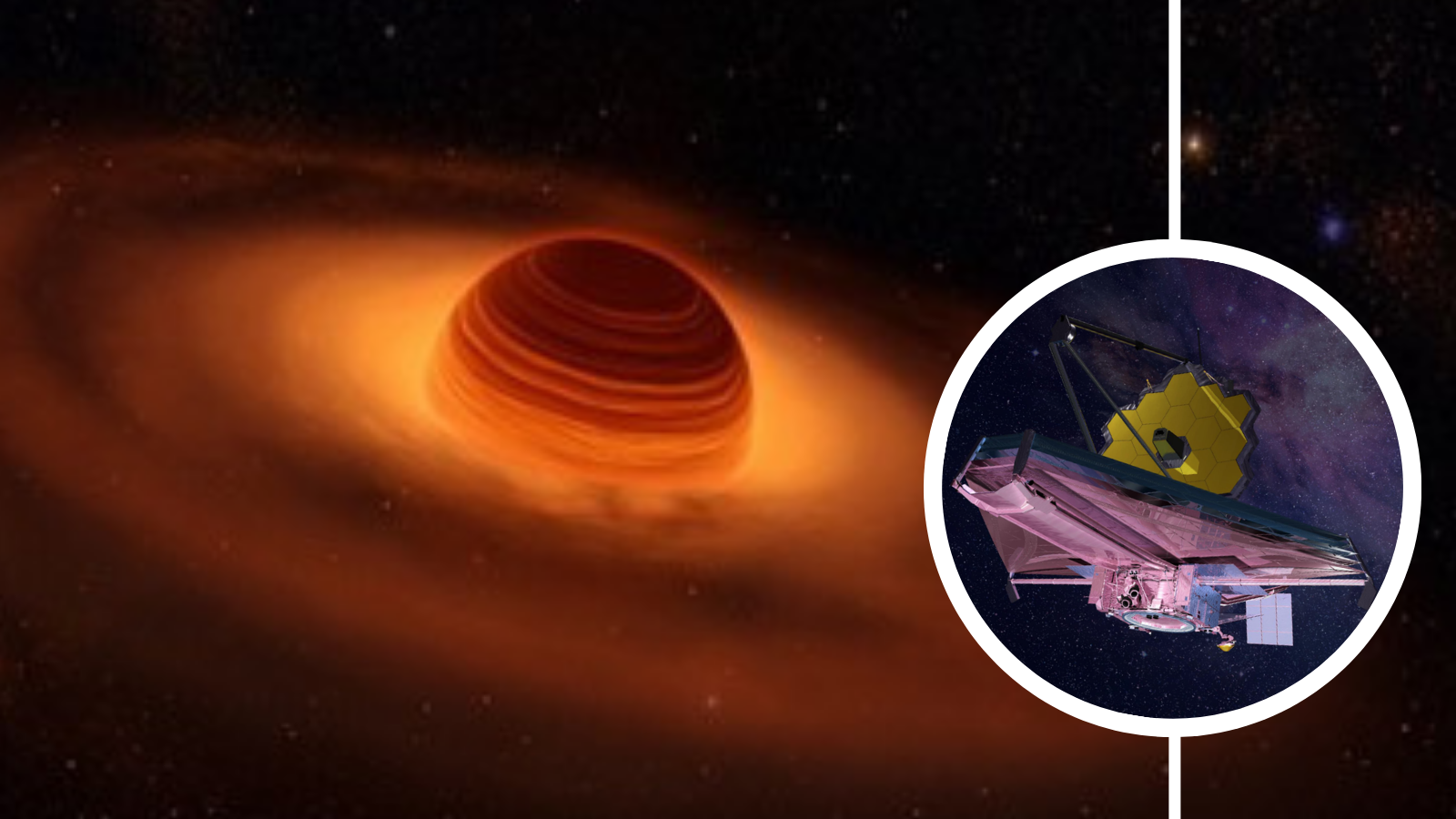
The James Webb Space Telescope (JWST) has revealed a giant exoplanet that is not perfectly spherical, offering scientists new insights into distant worlds and advancing efforts to map weather patterns beyond the Solar System.
The observation highlights the growing capabilities of the powerful space telescope in studying the physical characteristics and atmospheric conditions of planets orbiting stars beyond our Sun.
Unlike planets that appear nearly spherical, the newly observed world has a noticeably distorted shape. Such observations can help astronomers investigate how extreme conditions, including gravitational forces and intense atmospheric dynamics, influence the structure of giant planets.
The discovery also represents a step towards developing detailed weather maps of exoplanets, allowing researchers to study atmospheric variations, temperature differences and weather patterns on worlds located light-years away from Earth.
By analysing light emitted or reflected by distant planets, the James Webb telescope enables scientists to examine their atmospheres and better understand the processes shaping these alien environments.
As observations continue, researchers hope to build a more comprehensive picture of how giant planets form, evolve and behave under conditions that differ significantly from those found in the Solar System.



Leave a Reply