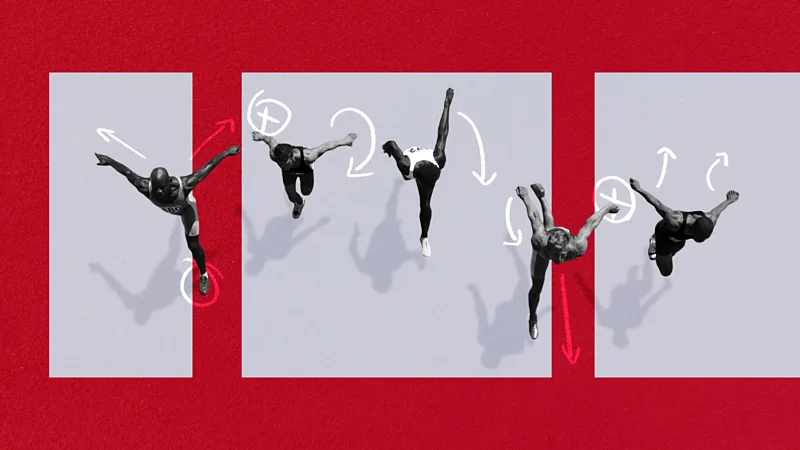
Olympic sprinters might seem like they’ve won the genetic lottery, but that doesn’t mean the rest of us can’t learn to run faster. While sprinters may be born with certain physical advantages, running speed ultimately boils down to a straightforward equation: speed equals step length multiplied by step frequency. Understanding and improving these elements can help anyone increase their running speed.

The Science Behind Speed
At the heart of sprinting is the balance between taking longer strides and increasing step frequency. Sam Gleadhill, a biomechanics researcher, explains that increasing one of these variables without sacrificing the other is key. Focusing too much on step length can shorten your stride frequency, and vice versa. Finding the right balance is crucial for optimizing speed.
Interestingly, even among elite sprinters, techniques vary. Some athletes, like Christian Coleman, rely on explosive power and shorter steps, staying low to the track to maintain acceleration. In contrast, Usain Bolt’s speed was largely due to his long strides, reaching up to 2.872m (9.5ft) in his record-breaking 100m sprint. His tall frame and leg length played a significant role in maximizing stride length.
Differences Between Male and Female Sprinters
There are subtle differences between male and female sprinters when it comes to how they achieve top speed. Research suggests male sprinters often rely more on step length, while female sprinters may rely more on step frequency. This may be linked to differences in leg length and muscle composition. Larger hip and knee flexor muscles, particularly in the tensor fasciae latae and gluteus maximus, also contribute to step length by generating greater force when the foot strikes the ground.

Improving Technique for Speed Gains
While genetics play a role in sprinting ability, technique can be improved through training. Sprinters can refine their form to minimize ground contact time, enhance leg turnover, and optimize acceleration.
Vassilos Panoutsakopoulos, a biomechanics expert, emphasizes that while step frequency is largely determined by genetics and does not change much after physical maturity, step length can be improved through training. Strengthening leg muscles, improving hip flexibility, and practicing the “pawing” action (similar to a horse’s stride) can help sprinters generate more force and increase stride length. He also recommends leaning forward at the start of a sprint to increase horizontal force and boost acceleration.
For novice and seasoned runners alike, improving sprint performance involves drills and focused practice. Exercises like high-knee drills, proper heel lifts, and reducing ground contact time can make a significant difference. As Eilidh Doyle, Olympic bronze medalist, notes, it takes years of coordination and training to perfect sprinting technique, but small tweaks can produce noticeable speed gains.
So, whether you’re a casual runner or aiming to boost your speed, adopting some of the techniques and training methods used by Olympic sprinters could help you run faster.



Leave a Reply