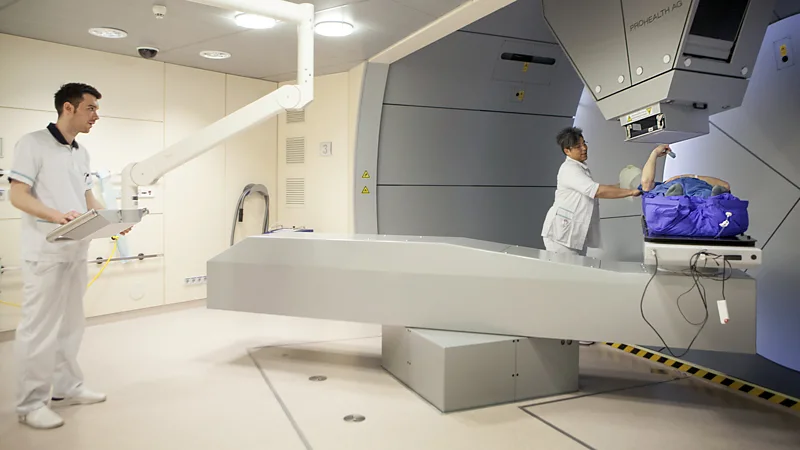
A groundbreaking treatment known as Flash radiotherapy is showing promise for revolutionizing cancer care by offering more effective outcomes with fewer side effects—all in less than a second.
Developed through pioneering research at the European Laboratory for Particle Physics (CERN) and other institutions, Flash radiotherapy uses ultra-high dose rates to target tumors while sparing surrounding healthy tissue. This breakthrough could redefine cancer treatment, especially for complex cases such as metastatic cancers and pediatric brain tumors.
How Flash Works
Flash radiotherapy delivers concentrated radiation in less than a second, a drastic reduction from conventional treatments that often span several minutes and require dozens of sessions over weeks. By using ultra-high dose rates, Flash minimizes the damage to healthy tissues, overcoming one of the most significant limitations of traditional radiotherapy.
The Promise for Patients
- Reduced Side Effects: Studies in animals and early human trials show that Flash treatments lead to fewer side effects. For example, rodents treated for head and neck cancers experienced fewer complications like dry mouth and swallowing issues.
- Increased Doses: Flash allows oncologists to safely administer higher radiation doses, improving treatment effectiveness for aggressive or metastatic cancers.
- One-Session Treatment: Instead of requiring weeks of therapy, Flash could deliver results in a single session or just a few sessions, drastically improving patient convenience.
Advancing Human Trials
- Skin Cancer: Lausanne University Hospital in Switzerland is conducting Phase 2 trials to optimize Flash doses for localized skin cancers.
- Metastatic Pediatric Cancers: Cincinnati Children’s Hospital in the U.S. is exploring Flash for children with metastatic cancer in the chest bones.
- Recurrent Cancers: The University of Pennsylvania plans trials for head and neck cancers, where traditional radiotherapy risks severe complications like jaw fractures or fatal carotid artery damage.
Challenges Ahead
- Technology Barriers: Flash requires complex particle accelerators that are currently expensive and accessible only in select facilities. CERN and other organizations are developing compact, cost-effective accelerators for broader use.
- Accessibility: In regions like sub-Saharan Africa, where radiotherapy infrastructure is limited, there’s a significant gap in access to treatments. Flash’s efficiency and reduced treatment duration could help bridge this disparity.
- Validation: Rigorous clinical trials are still needed to confirm that Flash is superior to conventional radiotherapy in terms of safety, efficacy, and long-term outcomes.
The Future of Flash
Efforts are underway to adapt existing proton and X-ray radiotherapy machines for Flash. Additionally, researchers at CERN and industry partners are designing compact accelerators that could bring Flash to standard hospitals worldwide.
Flash technology could transform cancer care globally by:
- Doubling or tripling treatment capacity: Shorter sessions mean more patients can be treated daily.
- Reducing costs: Fewer sessions and fewer complications lower overall healthcare expenses.
- Improving quality of life: Patients experience fewer side effects, shorter treatment times, and potentially better outcomes.
A Global Solution
Flash radiotherapy could especially benefit low- and middle-income countries, where radiotherapy is scarce. By enabling single-session treatments and minimizing travel needs, Flash has the potential to democratize access to advanced cancer care.
Looking Ahead
While Flash radiotherapy is still in its experimental stages, the technology has already sparked immense optimism. If validated through ongoing trials, Flash could emerge as one of the most significant advancements in oncology, bringing hope to millions worldwide.
As Dr. Billy Loo, a leading researcher in the field, puts it: “Flash produces less injury to normal tissue without compromising its ability to destroy tumors—this could truly be game-changing.”



Leave a Reply