Lagos, March 17, 2025 – The Federal Government (FG) and telecom industry leaders have renewed their commitment to bridging Nigeria’s digital divide, calling for stronger public-private partnerships to expand broadband connectivity, particularly in rural areas where 61% of the population remains unconnected.
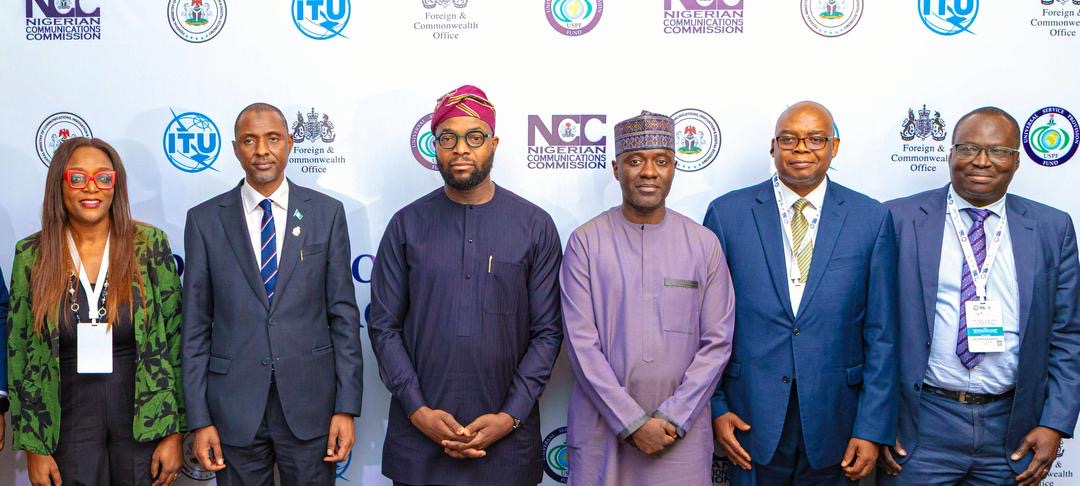
The discussion took place at a stakeholder engagement session organized by the Universal Service Provision Fund (USPF) in Lagos, in partnership with the International Telecommunications Union (ITU) and supported by the UK Foreign, Commonwealth & Development Office.
Addressing the Connectivity Gap
Speaking at the event, Minister of Communications, Innovation, and Digital Economy, Dr. Bosun Tijani, acknowledged Nigeria’s progress in broadband penetration but stressed that millions of people in remote areas still lack reliable digital access.
“Achieving universal connectivity requires a multi-sector approach, with telecom operators, infrastructure providers, and development agencies playing key roles,” Tijani said.
He emphasized that while the government is committed to digital inclusion, stronger collaboration with the private sector is essential for nationwide connectivity and digital transformation.
Nigeria’s Digital Divide: The Current Landscape
According to GSMA (Global System for Mobile Communications) data:
- Rural-urban internet gap dropped from 53% in 2018 to 39% in 2020.
- As of 2022, 61% of Nigerians in rural areas lack internet access, compared to 40% in urban areas.
- Internet penetration in Nigeria stands at 45.61%, meaning 91.22 million Nigerians are connected, while 108.78 million remain offline.
This digital gap limits access to critical online services in education, finance, healthcare, and e-commerce, particularly in rural areas.
Government Initiatives to Expand Connectivity
To address these challenges, the Federal Government has launched several broadband expansion initiatives:
📡 Project BRIDGE – A 90,000 km fibre-optic rollout designed to improve nationwide connectivity.
🏛 Project 774 – Aims to deliver high-speed internet to every local government secretariat in Nigeria.
🌍 Universal Access Project – Targets over 20 million Nigerians currently without digital access.
📶 National Broadband Alliance of Nigeria – A multi-stakeholder initiative aimed at improving broadband quality.
The Role of Telecom Operators & Alternative Solutions
Executive Vice Chairman of the Nigerian Communications Commission (NCC), Dr. Aminu Maida, highlighted the importance of innovative financing models and alternative power solutions to accelerate rural connectivity.
“Expanding telecom infrastructure in underserved areas requires a mix of public and private investment, as well as policies that encourage sustainable growth,” Maida said.
“We must harness our collective expertise and resources to build a resilient telecom infrastructure that empowers millions of Nigerians.”
Industry experts at the event underscored the economic and social benefits of digital inclusion, emphasizing that better broadband access could unlock:
✅ Financial inclusion through mobile banking.
✅ E-commerce growth in underserved areas.
✅ Telemedicine & digital healthcare solutions.
✅ Improved access to online education and remote learning.
With the digital economy playing an increasingly vital role in Nigeria’s economic development, stakeholders agree that bridging the digital divide is crucial for national progress.
Looking Ahead
As Nigeria pushes for greater broadband penetration, sustained investment in infrastructure and policy reforms will be key to ensuring affordable, high-speed internet access for all Nigerians—particularly those in rural communities.



Leave a Reply