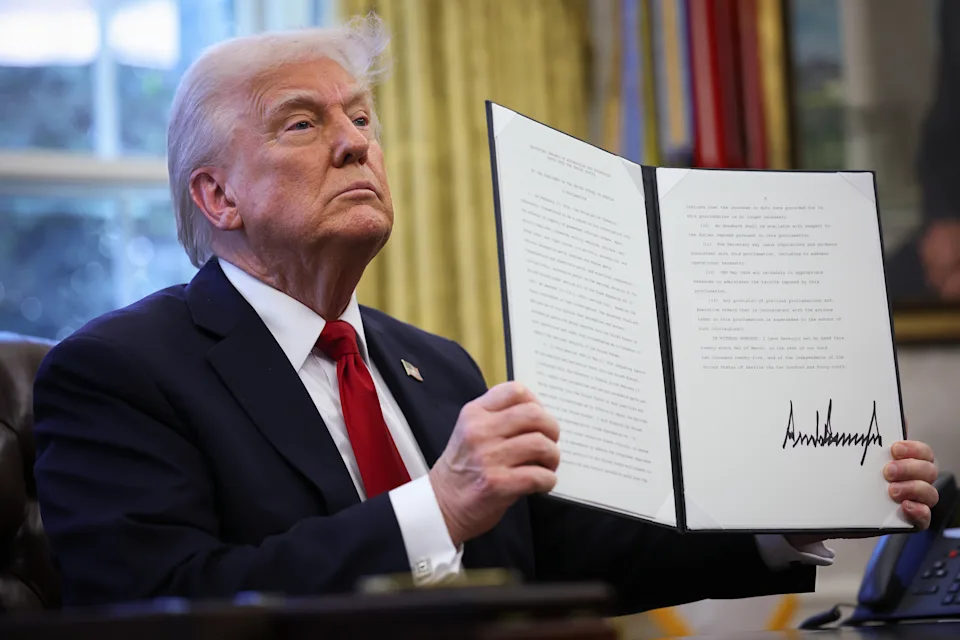
In a major shift in trade policy, the U.S. government has announced a 25 percent tariff on all cars manufactured outside the country, in addition to any existing duties. The tariff will also apply to a range of imported auto components, including engines, transmissions, powertrains, and electrical parts.
While the new measures are intended to protect the American auto industry, there are exemptions for U.S.-based manufacturers and companies sourcing parts from Mexico and Canada, thanks to provisions under the US-Mexico-Canada Agreement (USMCA).
Historical Parallels and Industry Concerns
The move echoes similar protectionist policies from past decades. During the 1970s oil crisis, American automakers struggled as consumers turned to smaller, more fuel-efficient Japanese cars, despite high import tariffs—some reaching 60 percent, according to a 2017 PBS report. Before 1980, Ford, General Motors (GM), and Chrysler dominated the U.S. market; today, they compete fiercely with Toyota, Honda, and Hyundai for market share.
Industry experts warn that higher prices on foreign cars do not guarantee consumers will automatically favor American-made vehicles. “Consumers prioritize value and efficiency,” says auto industry analyst Mark Thompson, “and history shows that tariffs alone don’t ensure brand loyalty to domestic manufacturers.”
Impact on Electric Vehicles (EVs) and Global Competition
The tariffs come at a time when the current administration has faced criticism for scaling back policies supporting electric vehicle adoption. Analysts suggest this could push automakers to shift focus back to gas-powered vehicles, especially as public opinion on leading EV makers, like Tesla, faces increasing scrutiny.
Moreover, experts warn that these tariffs could weaken U.S. competitiveness on the global stage, especially against China, which has heavily invested in electric vehicle production. “By isolating the American market, the U.S. risks falling behind as China accelerates its global EV expansion,” Thompson adds.
Looking Ahead
While the new tariffs aim to shield U.S. auto manufacturers, critics argue they could drive up prices, reduce consumer choice, and ultimately hurt innovation. Whether the policy boosts domestic production or backfires by stifling competition remains to be seen—but the global auto industry will be watching closely.



Leave a Reply