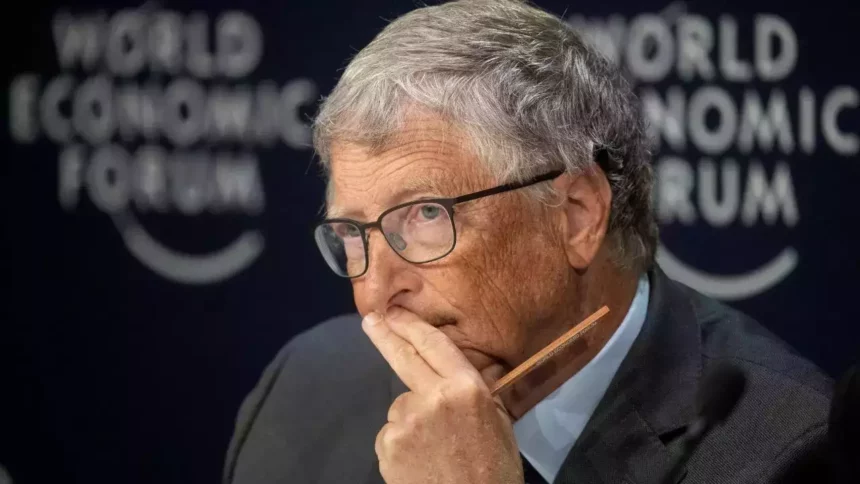
Microsoft co-founder Bill Gates has warned that advances in artificial intelligence (AI) over the next decade could make humans unnecessary for most tasks. Speaking in a February interview on NBC’s The Tonight Show with Jimmy Fallon, Gates emphasized that AI’s rapid progress could transform work, education, and healthcare.
Gates acknowledged that while human expertise remains crucial today—particularly in fields like medicine and education—AI could soon provide high-quality services at no cost.
“With AI, over the next decade, that will become free, commonplace—great medical advice, great tutoring,” Gates said.
He suggested the world is entering a new era of “free intelligence,” where advanced AI systems could deliver expert-level guidance across various industries.
AI’s Rapid Rise: Opportunities and Risks
Gates highlighted how AI’s evolution could improve lives by providing:
- Better healthcare through AI-driven medical diagnostics and treatment recommendations.
- Education support with virtual tutors offering personalized learning experiences.
- Automation of repetitive tasks, freeing humans for more complex and creative work.
Despite the potential benefits, Gates expressed concerns about the speed of AI’s advancement.
“It’s very profound and even a little bit scary—because it’s happening very quickly, and there is no upper bound,” Gates remarked during a separate discussion with Harvard University professor Arthur Brooks.
A Disruptive Future for the Workforce
The rise of AI raises questions about how humans will fit into a world dominated by machine intelligence.
Some experts believe AI will enhance productivity rather than replace workers entirely, fostering economic growth and creating new job opportunities.
However, Mustafa Suleyman, CEO of Microsoft AI, has warned that AI’s rapid development could destabilize global workforces. He cautioned that most industries will undergo fundamental changes, with many traditional roles being displaced or transformed.
“Advancements in technology over the next several years will transform the nature of most jobs across nearly all industries,” Suleyman said, describing the potential consequences as “hugely destabilizing.”
Balancing Innovation and Responsibility
As AI capabilities continue to expand, tech leaders and policymakers face the challenge of ensuring ethical development while minimizing harm to society.
Gates has previously advocated for regulatory frameworks to manage the societal impact of AI while encouraging continued innovation.
With AI poised to reshape daily life and the global economy, the debate over how humans will adapt to an AI-driven future is more urgent than ever.



Leave a Reply