The United States has renewed the African Growth and Opportunity Act (AGOA), extending duty-free access to the American market for eligible African exports until December 31, 2026, offering temporary relief to economies reliant on trade with the US, including Kenya’s growing digital export sector.
The extension provides a political and economic lifeline to countries investing in digital trade as a source of jobs and growth, following fears that the agreement could lapse after former US President Donald Trump signalled a possible scrapping of AGOA as part of broader tariff measures.
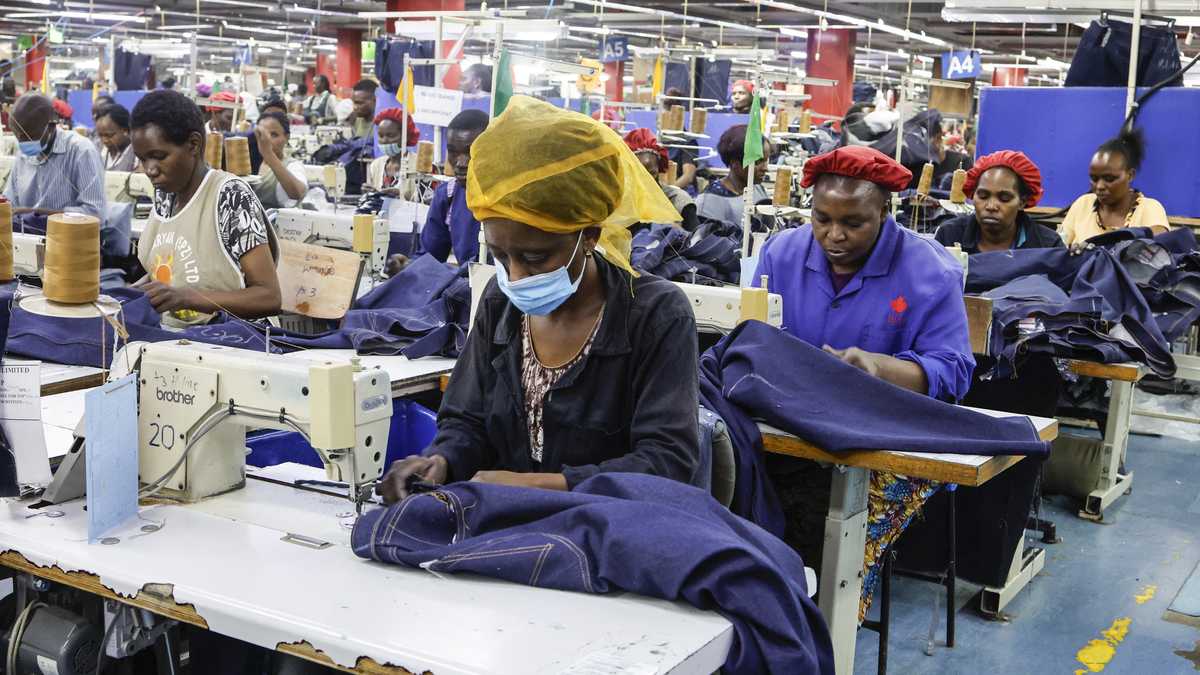
Kenyan officials and industry groups had warned that the expiration of the deal could threaten more than 66,000 export processing zone (EPZ) jobs and as many as 800,000 livelihoods nationwide. An estimated 3,000 to 7,000 tech-related roles linked to export processing — including call centres, software services and data-related work — were also at risk.
While the renewal has eased immediate concerns, analysts say the real challenge lies ahead, as the US intensifies scrutiny of cross-border data flows, digital services and technology-driven exports. This poses new risks for digital hubs like Kenya, where sectors such as business process outsourcing (BPO), software development and AI data labelling have become major employment drivers.
Kenya has invested heavily in building its “Silicon Savannah” identity, developing an IT-enabled services economy that serves global tech firms. However, recent data highlights emerging vulnerabilities. According to the Kenya National Bureau of Statistics (KNBS), ICT export earnings fell from KES 227.0 million ($1.76 million) in October 2025 to KES 208.1 million ($1.61 million) in November, while ICT imports rose from KES 4.4 billion ($34.1 million) to KES 5.1 billion ($39.5 million) over the same period, widening the digital trade gap.
Industry experts warn that Kenya’s digital labour market is highly sensitive to US policy shifts, noting that changes such as tariffs on digital services or new data-localisation rules could trigger rapid contract relocations, leaving firms struggling to retain clients and workers facing job losses.
Although Kenya’s official unemployment rate stands at about 5.6 per cent, over 80 per cent of non-farm workers remain in informal employment, making them particularly vulnerable to shocks in US-linked digital contracts and export earnings.
The Kenya Association of Manufacturers (KAM) welcomed the AGOA extension, saying it would help firms avoid supply chain disruptions and order cancellations that had begun to affect export planning in late 2025.
“The United States is one of Kenya’s most important trading partners, accounting for about 9 per cent of our external market. Kenya’s exports to the USA stood at $788.6 million in 2025, compared to imports of $930.8 million,” said KAM Chief Executive Officer, Tobias Alando.
While the renewal keeps Kenya within the group of countries enjoying preferential access to the US market, analysts note that it only buys time. The shift toward tighter digital trade regulation, national security controls and data privacy rules in Washington is expected to continue, posing long-term challenges for Kenya’s digital export economy.



Leave a Reply