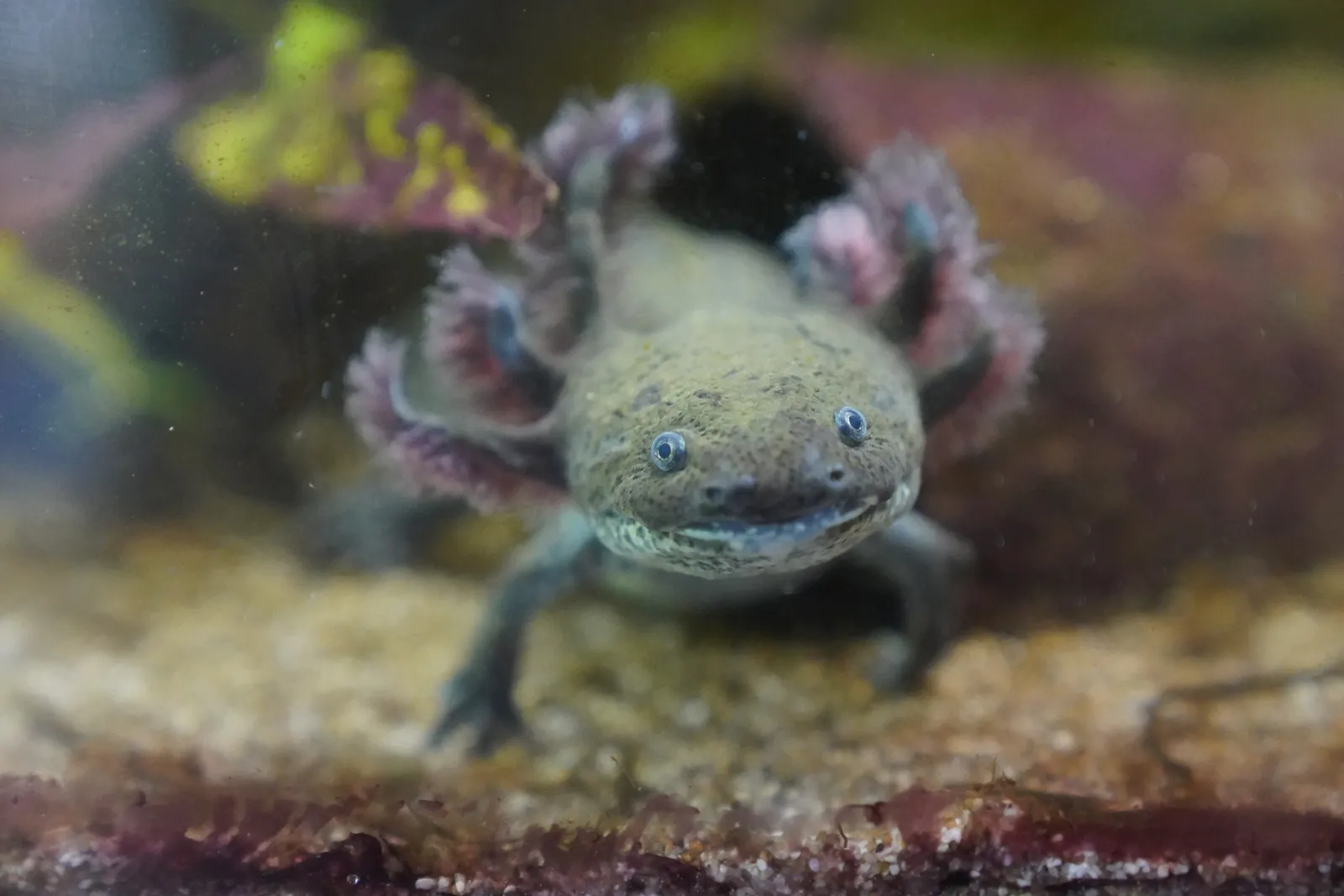
Mexico City – The axolotl, Mexico’s revered amphibian and a symbol of national heritage, is teetering on the brink of extinction in the wild. A new scientific survey of its only remaining natural habitat, the Xochimilco canal system, has so far failed to locate a single living specimen, raising alarm over the species’ survival.
Scientists from the National Autonomous University of Mexico (UNAM) are leading the 2024 axolotl census, using both traditional fishing techniques and advanced environmental DNA analysis. Despite their efforts, the team has yet to confirm the presence of a surviving wild axolotl. The closest sign came in the form of a possible axolotl egg—discovered too late, already consumed by invasive fish species.
A Species in Freefall
The axolotl (Ambystoma mexicanum) was once abundant in the waters of Xochimilco, a UNESCO World Heritage Site and one of the last remnants of the vast lake system that once covered the Valley of Mexico. However, scientific surveys show a catastrophic decline:
- 1998: 6,000 axolotls per square kilometer
- 2004: 1,000 per square kilometer
- 2008: 100 per square kilometer
- 2014: Just 36 axolotls recorded in the wild
Now, a decade later, conservationists fear the population may have dwindled even further—or disappeared entirely.
Threats to Survival
According to UNAM researchers, three primary factors are driving the axolotl toward extinction:
- Invasive Species – The introduction of carp and tilapia to Xochimilco has devastated the ecosystem. Carp feed on axolotl eggs, while tilapia prey on juveniles and compete with adults for food.
- Pollution – Increasing urbanization and water contamination have severely degraded the axolotl’s habitat.
- Human Activity – Artificial noise and light pollution have contributed to rising stress levels in axolotls, making them more vulnerable to disease.
“The high density of tilapia worsens the axolotl’s situation,” said Vania Mendoza Solís, co-director of the census and a UNAM researcher specializing in marine sciences. “Their critical state reflects the overall deterioration of Xochimilco, an ecosystem vital to Mexico City’s water system.”
A Race Against Time
While scientists continue to search for wild survivors, efforts are underway to reintroduce lab-raised axolotls into Xochimilco. The UNAM team is carefully selecting specimens with the strongest genetics, resistance to stress, and survival skills before releasing them into the canals.
“Axolotls thrive at 18 degrees Celsius with clean water and abundant food,” said Horacio Mena, coordinator of UNAM’s axolotl breeding program. “We are working to ensure that the individuals we reintroduce have the best chance of survival.”
More Than a Symbol
Beyond its cultural and historical significance—featured on Mexico’s 50-peso bill and once considered divine by the Aztecs—the axolotl is a scientific marvel. It possesses unmatched regenerative abilities, capable of restoring lost limbs, repairing spinal cord injuries, and even regenerating portions of its heart and brain. This has made it a key focus of medical research on tissue regeneration and aging.
The Future of the Axolotl
The final results of the 2024 axolotl census will be published in mid-2025, with a follow-up count planned for 2026. Conservationists hope that by restoring its habitat and combating misinformation, the axolotl can still be saved.
For now, however, the species remains one of the most endangered amphibians on Earth—and time is running out.



Leave a Reply