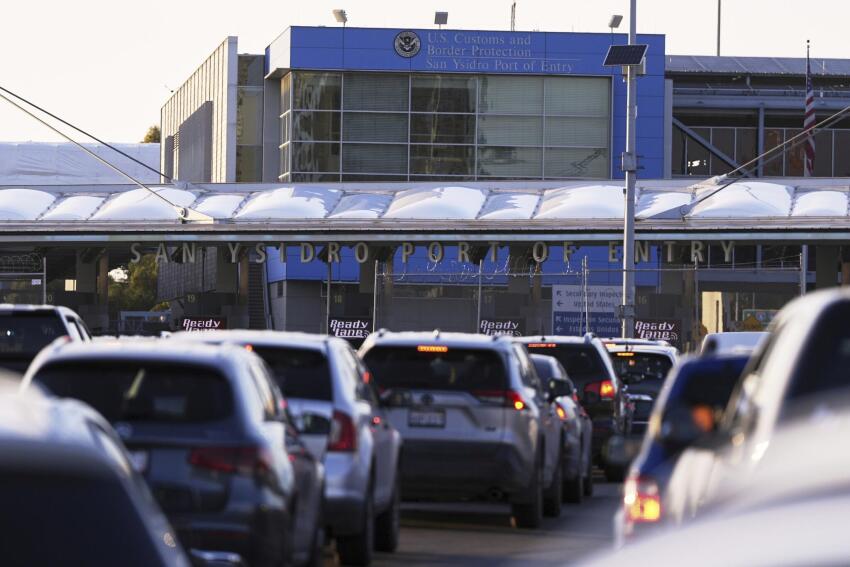
Washington, D.C. — April 12, 2025 — Travelers entering the United States may face increased scrutiny of their personal electronic devices, prompting new warnings from civil liberties groups and foreign governments about privacy risks at international borders.
In an updated travel advisory, the Canadian government cautioned citizens that U.S. border agents are permitted to inspect smartphones, laptops, and other electronic devices without probable cause. Agents may also demand passwords to unlock devices—and are not required to justify their requests.
The advisory underscores growing concern over U.S. Customs and Border Protection (CBP) practices, which critics say are invasive and legally murky. The Electronic Frontier Foundation (EFF), a nonprofit focused on digital rights, reports that more than 47,000 electronic device searches were conducted by CBP in 2024—up from just 4,700 a decade ago.
“Basic searches can be for no reason at all—totally random, or based on a mere hunch,” said Sophia Cope, a senior staff attorney at EFF. “There is very little oversight, and people need to understand what they’re consenting to when they hand over their phones.”
The U.S. border search policy differentiates between “basic” and “advanced” searches. A basic search allows officers to manually inspect photos, emails, and apps without suspicion. Advanced searches—where device data may be copied and analyzed—require reasonable suspicion or national security concerns and must be approved by a supervisor.
Concerns around privacy intensified following a recent case involving a Brown University professor holding a valid U.S. visa. The professor was reportedly deported after border agents discovered a photo of Hezbollah’s leader on her phone, despite no allegations of criminal activity.
Privacy Experts Urge Precautionary Measures
Cybersecurity experts recommend travelers take proactive steps to protect their data. These include using a temporary or “burner” phone with minimal information stored locally, uploading sensitive files to encrypted cloud storage, and encrypting all devices before crossing borders.
“If you must bring your phone or laptop, upload sensitive files to a secure cloud and delete the originals,” said Patricia Egger, head of security at encrypted email provider Proton Mail. “And always power off your devices before landing. That ensures encryption keys are flushed from memory and can’t be extracted.”
Experts also advise against using biometric unlock methods, such as facial recognition or fingerprint scans, which can be forcibly used by authorities. Instead, travelers should rely on strong passcodes and keep devices in airplane mode or offline to prevent cloud-based data from syncing or downloading at the border.
Citizens Have Rights—But Limited Protections
While American citizens and permanent residents cannot be denied entry for refusing to unlock their devices, foreign travelers—including visa holders—can be turned away. Devices may be seized and held for days or weeks without a warrant, according to rights groups.
“Where possible, unlock the device yourself rather than handing over the password,” Egger said. “And change your credentials immediately after the interaction.”
EFF also warns that tactics like wiping a device clean before travel can backfire, potentially triggering further questioning. “Even traveling without the types of data most people carry—emails, social media apps, photos—can raise suspicion,” the group noted in a digital rights guide.
Privacy concerns are not confined to the United States. In the United Kingdom, counterterrorism laws allow police to demand access to electronic devices at the border. Refusal can lead to criminal charges.
The proliferation of device searches highlights the growing intersection of national security, digital rights, and global travel. Civil liberties advocates continue to call for clearer legal standards and stronger safeguards against what they describe as indiscriminate surveillance practices.
“People shouldn’t have to choose between crossing a border and protecting their privacy,” Cope said. “But right now, that’s the reality.”



Leave a Reply