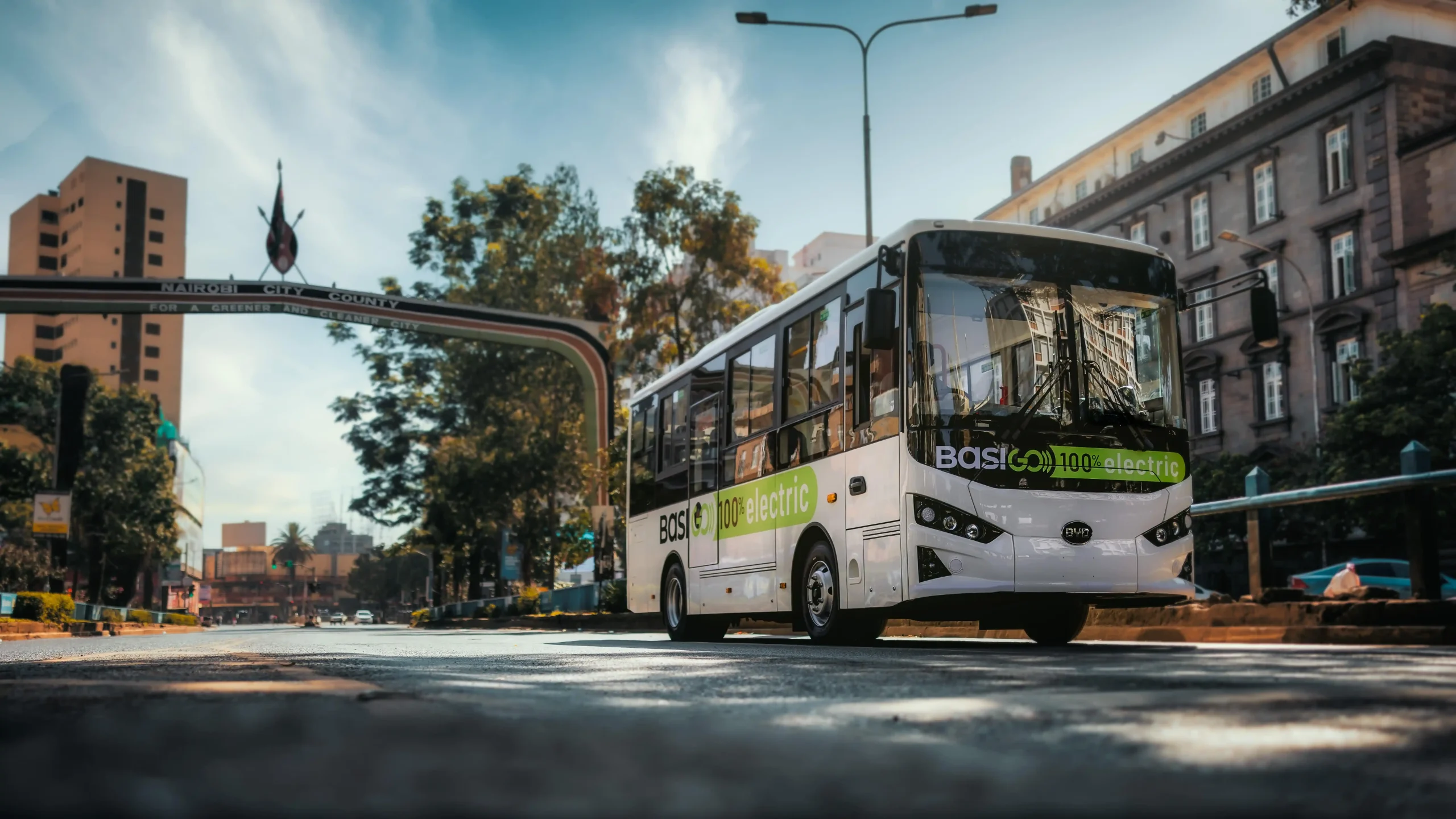
Kenyan electric bus startup BasiGo has begun testing a scheduled commuter service in Nairobi, marking its entry into fixed-route operations previously targeted by Egyptian mass-transit startup Swvl.
Through its Jenga partnership model, BasiGo integrates electric mid-sized buses into local commuter cooperative societies (Saccos), offering direct connections between residential estates and major commercial hubs such as Westlands and Upper Hill. The service uses structured schedules, digital payments, and guaranteed seating to attract both frustrated matatu users and private car owners.
“The model is built on data, unlike traditional public service vehicle operations. We collect and analyse customer demand to determine which routes make sense for operators, and with those insights, operators deploy buses on structured schedules,” said Moses Nderitu, BasiGo’s Kenyan managing director.
Fares for the pilot service range from KES 150 ($1.16) to KES 200 ($1.55), slightly above traditional matatu rates but offering direct, time-saving routes. The company claims that commuters can save up to 40 minutes on journeys such as Nyayo Estate to Westlands via the Nairobi Expressway. Approximately 300 unique weekly riders currently use the three-bus pilot, with an average occupancy of 80%.
The financial model allows local operators to retain 75% of revenue after operating expenses, with BasiGo taking a 20% share while providing technology, data insights, and route optimisation. Payments are mostly made via M-PESA, Kenya’s popular mobile wallet system, while some users pre-book through BasiGo’s Jani app.
BasiGo plans to expand its fleet by 10 buses over the next 12 to 24 months, depending on vehicle delivery and charging infrastructure rollout. The company competes with ride-hailing platforms like Uber and Bolt, as well as diesel-powered executive shuttles, aiming to formalise Nairobi’s fragmented transit sector while accelerating the adoption of electric mobility.



Leave a Reply