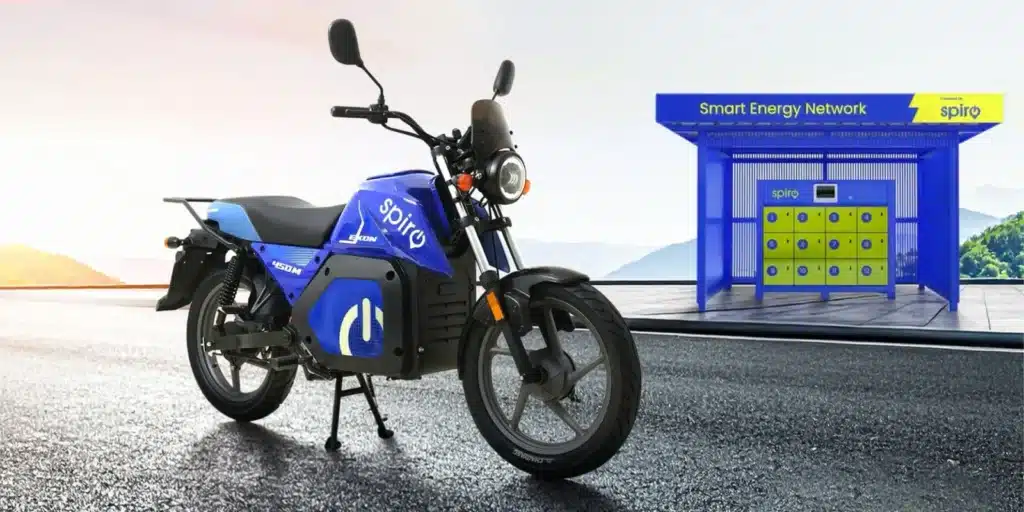
Spiro, Africa’s most-funded electric vehicle startup, has secured a $215 million funding round — one of the largest capital raises ever by an African mobility company — as it shifts its long-term strategy from simply selling electric motorcycles to building a continent-wide battery-swapping and energy infrastructure network.
A $500 Million Fundraising Journey
The latest equity raise, led by Impact Fund Denmark and Equitane, brings Spiro’s total funding to over $500 million in combined debt and equity financing. This includes a $50 million facility from Afreximbank and a $100 million funding round announced in 2025, cementing Spiro’s position as the best-funded electric motorcycle company in Africa — far ahead of competitors such as Ampersand ($43 million raised) and Roam ($32 million raised).
Motorcycles Today, Energy Infrastructure Tomorrow
While electric motorcycle sales remain Spiro’s primary revenue driver today, the company’s co-founder and chairman, Gagan Gupta, made clear in a statement to TechCabal that the real prize lies in the infrastructure being built around those vehicles.
“Vehicle sales serve as the entry point for market adoption, but as fleet density increases, energy demand scales in a compounding manner — and with it, the recurring, high-margin revenue profile that defines infrastructure businesses,” Gupta said.
In other words, every electric motorcycle sold becomes a recurring user of Spiro’s battery-swapping network — transforming a one-time hardware sale into a long-term energy services relationship.
2,500 Battery-Swapping Stations Across Africa
Spiro says it has already deployed more than 2,500 battery-swapping stations across Africa, addressing what the company calls “rider anxiety” — the reluctance of commercial motorcycle operators to switch to electric vehicles when access to reliable battery swaps remains uncertain.
For commercial motorcycle taxi riders (known as boda bodas in East Africa), who earn money only when they are on the move, a dead battery far from a swap station means lost income. Spiro argues that a dense, reliable battery-swapping network makes electric motorcycles a genuinely practical — and economically superior — option for riders.
How the $215 Million Will Be Deployed
The new capital will not fund a new product or pivot to a different market. Instead, Spiro is directing the entire raise toward:
- Expanding battery production capacity
- Rolling out additional swap stations across existing markets
- Deepening market penetration in countries where it already operates
- Localising manufacturing to reduce costs and strengthen supply chains
Already Cash-Positive in Two Markets
In a significant disclosure, Gupta confirmed that Spiro is already cash-positive in its two most mature markets — a meaningful milestone for a startup that has long been defined by its deployment numbers rather than its financial performance. While Spiro declined to name those markets or share specific financial figures, the statement signals a business beginning to demonstrate sustainable unit economics beyond fundraising and expansion.
“Our most mature markets are already demonstrating the utilisation trajectory consistent with our target unit economics,” Gupta said.
Opening the Network to Third Parties
Looking beyond its own fleet, Spiro is preparing to open its energy infrastructure to third-party partners — a move that could significantly expand the commercial value of its swapping network by allowing other operators and businesses to tap into it.
The company also acquired Coexlion, a UK-based engineering and design firm, in May 2026, as part of efforts to strengthen its engineering, product development, and energy infrastructure capabilities.
Gupta also pointed to broader long-term applications for the underlying infrastructure, including battery storage, distributed energy solutions, and grid-related applications — areas that are not yet major revenue contributors but represent Spiro’s vision of becoming a full-spectrum African energy infrastructure company.
“Electric mobility and energy infrastructure are two sides of the same coin. To succeed in one, you must deliver the other,” Gupta said.
The Race to Electrify Africa’s Motorcycles
Spiro operates in one of Africa’s most compelling investment sectors. Kenya alone is estimated to have three million boda boda operators, the majority of whom spend a significant portion of their daily earnings on fuel. Similar dynamics exist across Nigeria, Rwanda, Uganda, Benin, and other African markets.
Alongside Spiro, startups including Ampersand, Roam, and ARC Ride are all competing to electrify Africa’s two-wheeler transport sector — but none have matched the capital firepower that Spiro has assembled.
With over half a billion dollars raised, 2,500 swap stations deployed, cash-positive operations in its most mature markets, and a clear pivot toward energy infrastructure, Spiro is positioning itself not just as an electric motorcycle company but as the backbone of Africa’s clean energy mobility ecosystem.



Leave a Reply